


The Row, Leather vs Suede: What the Premium Pays For
Fifteen hundred and twenty dollars. Between the India 10.00 in leather at $3,850 and the same bag in suede at $5,370, that is the observed 2026 difference — the very same silhouette, the same dimensions, the same hardware, and one change of material. The pattern recurs across the line, which tells you it is a pricing decision and not a seasonal quirk. Anyone comparing the row bags at the top of the range runs into this as the biggest non-size variable in play, and easily the least explained. An honest answer comes down to hide yield, finishing labour, durability and the way each material performs years later on the secondary market. What follows measures calfskin and suede against each other on all four, working from observed market prices rather than an official list, because the brand publishes none.
The Premium, in Numbers
Start with the evidence, because the suede surcharge is regular enough to put a number on. Three pairings on the observed 2026 line-up show the same silhouette in both materials, and the spread is remarkably stable in dollar terms across the India family. The Agnes 15 is the exception, narrower in both dollar and percentage terms, so the premium should not be read as a fixed rule. The same model also is listed in a canvas blend at $4,300, seven hundred dollars below its own leather version, which completes the material ladder from canvas up through calfskin to suede. Because the number in each model name is simply the bag’s width in inches, these really are like-for-like comparisons and not size steps in disguise. Stock and stockist both move prices, the row handbags classic top handle so the table is best read as one moment in the market rather than a permanent price.
| Model | In leather, observed 2026 | In suede, observed 2026 | The gap |
|---|---|---|---|
| India 10.00 | $3,850 | $5,370 | +$1,520, close to 39% |
| India 12.00 | $3,890 | $5,450 | +$1,560, around 40% |
| Agnes 15 | $5,000 | $5,800 | +$800, roughly 16% |
Calfskin, and What It Delivers
Structurally, calfskin is what holds the catalogue together, and it is the reason so many of these bags stand up when empty. It holds a defined shape once granted one, which is critical for a house that labels itself with an outline rather than a logo. It also takes a range of finishes, so a single hide type can generate very different objects. Listed as one hundred percent calfskin in a matte grained finish and lined in cotton herringbone, the Soft Margaux 10 sits alongside the Margaux Shoulder 12, which pairs calfskin with a full lambskin lining. At this level, authentic calfskin is soft and substantial together, and it absorbs light instead of throwing it back — a reliable way to read a row bag in person. Practically, it is the more forgiving of the two materials: it can be buffed, lightly conditioned and, within limits, professionally repaired.
The Calfskin Finishes You Will Come Across
Calfskin in the line does not all behave the same way, and the finish alters both the look and the maintenance burden. The variations are shared across families rather than owned by one model, which makes learning them once money well spent. Smooth calfskin takes marks most readily and reads as the most formal of the group. Matte grained calfskin appears on the Soft Margaux family, hides wear better than the rest and functions as the workhorse of the collection. Saddle calfskin runs heavier and more structured, and it is what gives the compact top-handle shapes their rigidity. At the dressiest end sits polished calfskin, whose surface catches light just as the matte finishes deliberately do not. The list below sets out what each finish demands of an owner.
- Smooth calfskin — the most refined, and the least tolerant of scuffs and rings
- Matte grained calfskin — strongest everyday compromise, hides light wear well
- Saddle calfskin — structural and firm, and it holds shape hardest of all
- Polished calfskin — the most formal surface, and the first to register handling marks
- Lambskin and nappa — mostly used as lining, exceptionally soft and easily marked
What Suede Does
A different proposition completely, suede is chosen for hand and depth of colour rather than for durability. The same silhouette acquires a softer edge and a matte density calfskin simply cannot reproduce, and that is why it is used on relaxed and structured shapes alike. Here, genuine suede is uniform in colour across the panel and free of plastic sheen; that evenness is one of the material’s tells when a bag is being judged in person. Within the Margaux family it appears next to grained calfskin, saddle calfskin, canvas and nylon, and it drives several pieces beyond the current catalogue as well. A suede Backpack 9 has been observed at $3,900 through a retailer; the archive Bindle, meanwhile, was a suede bag with raw-cut trims and a knotted detail, reported at roughly $1,190 originally. The Bindle Three, likewise suede, has been observed around $1,700 on the secondary market, complete with its single padded handle and removable inner zipped pouch.
Why Suede Costs More to Produce
The surcharge has four explanations, not one of which is branding. Suede is produced from the inner surface of the hide, which reduces the usable area per skin and lifts the rejection rate for panels large enough to cut a bag from. Colour has to be even across every panel, and suede shows inconsistency far more starkly than a grained surface, so matching costs more. Seams have to carry the nap in the right direction, which adds cutting constraints a smooth leather pattern never meets. Finally, suede is harder to correct in production, because a mark that could be buffed out of calfskin is permanent here. The Agnes 15 gap of $800 set against the India family’s $1,520 to $1,560 suggests the premium follows how much material a given pattern consumes, not a flat brand-wide uplift.
Day-to-Day With Each Material
There is no brand-issued care protocol for these bags, so what follows is material-appropriate general guidance rather than an official instruction set. The basics are the same for every row bag regardless of material: no overfilling, no direct sunlight, heat or rain, and storage in its dust bag lightly stuffed so it holds shape. From there the materials diverge sharply, and treating suede like calfskin is the quickest route to ruining an expensive purchase. Calfskin takes a soft dry cloth well, plus the rare neutral conditioner used sparingly. Suede responds to almost nothing except a suede brush, and stains generally need professional attention. Below is the ordered sequence worth following the moment either material picks up a mark.
- Stop, and identify which material you are dealing with before touching the mark with anything
- For calfskin, a gentle buff with a soft dry cloth comes first, followed by a fresh look
- Use neutral conditioner on calfskin sparingly and infrequently, never as routine
- On suede, use a suede brush only, working with the nap
- Never bring leather cream, wet wipes, soap or any water-based cleaner near suede
- Hand any real suede stain to a professional rather than trying to solve it yourself
What the Market Gives Back for the Difference
Resale does not hand the suede premium back evenly, which is worth understanding before you pay it. The Rebag CLAIR 2025 report recorded 97% brand-level value retention for The Row, placing it into the top tier for the first time behind only Telfar, Hermes and Goyard. The strongest individual figures gather in structured leather pieces: the N/S Park Tote at 146%, the Margaux Tote at 107% and the Half Moon shoulder at 106%. The appreciation belongs to black and neutral calfskin in the signature silhouettes, not to the catalogue at large, and canvas, nylon, sisal and seasonal-colour pieces are observed discounting. None of this is investment advice, and none of it means suede is a mistake. It means the suede premium should be paid for the object itself, because the resale market is unlikely to hand it back.
Deciding Between the Two
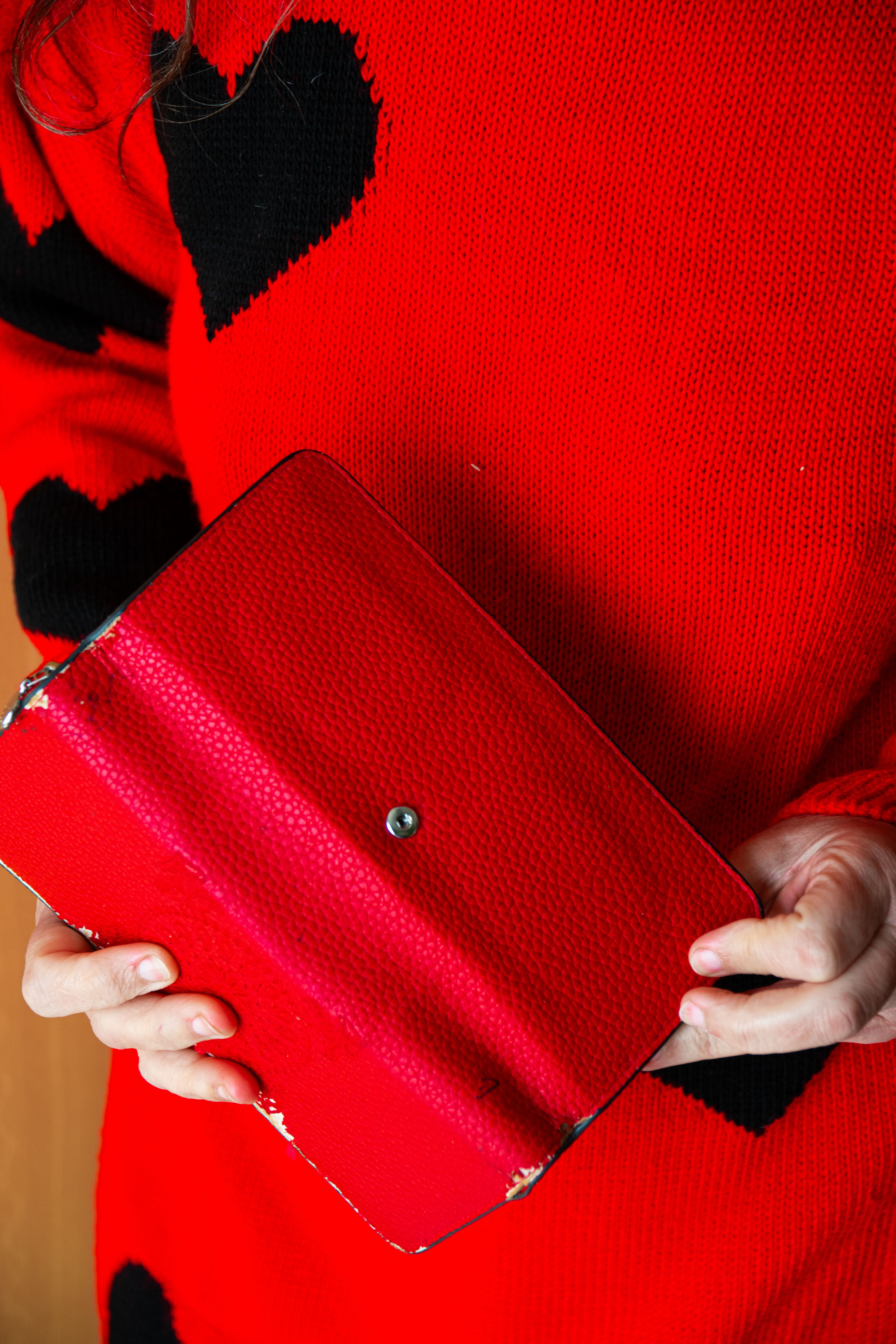
Stop framing it as better versus worse and the decision becomes far easier. Calfskin is the answer if the bag will be in constant use, out in unpredictable weather, or expected to hold a defined shape for a decade. Suede makes sense if you already own the structured piece and want that silhouette with a different hand, or if the colour depth is the entire reason. Anyone building a first serious collection of row handbags is generally better served putting the money into a structured leather signature shape and adding suede later. If both versions of a model are in front of you and you cannot decide, the tie-breaker is your climate and your storage rather than your taste. That is the least glamorous conclusion in the row fashion conversation, and the one owners reach on their own after the first rainy afternoon.


